Exploring PHP and Its Frameworks: Laravel, CakePHP, and CodeIgniter
By: Web Desk | May 27, 2025
Introduction
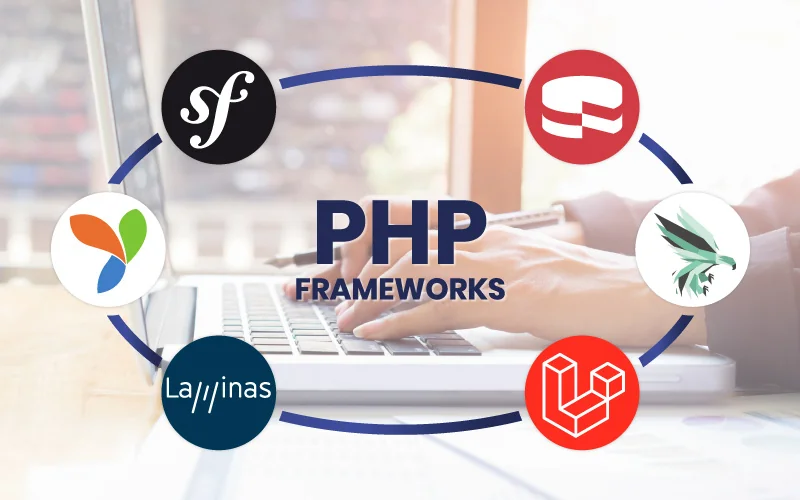
PHP, a server-side scripting language, has been a cornerstone of web development since its inception in 1994 by Rasmus Lerdorf. Known for its simplicity and flexibility, PHP powers over 75% of websites, including giants like WordPress and Facebook. Frameworks like Laravel, CakePHP, and CodeIgniter have elevated PHP's capabilities, offering structured, efficient, and scalable solutions for modern web applications. This blog post explores PHP and its popular frameworks, diving into their features, advantages, use cases, and more.
Key Features
PHP frameworks like Laravel, CakePHP, and CodeIgniter share core PHP strengths while adding unique functionalities:
- Laravel:
Known for its elegant syntax and robust ecosystem, Laravel offers features like the Eloquent ORM for database interactions, Blade templating for dynamic views, and Artisan CLI for task automation. It includes built-in authentication, routing, and middleware support, making it ideal for rapid development.
- CakePHP:
Emphasizing convention over configuration, CakePHP provides a structured MVC architecture, built-in CRUD scaffolding, and a flexible ORM. Its Bake console automates code generation, and it supports rapid prototyping with minimal setup.
- CodeIgniter:
Lightweight and performance-focused, CodeIgniter offers simplicity and minimal configuration. It includes a straightforward MVC framework, built-in security tools, and support for multiple database systems, making it suitable for small to medium-sized projects.
All three frameworks support modularity, extensibility, and integration with modern tools like Composer for package management.
Advantages Over Other Programming Languages
PHP and its frameworks hold several advantages over languages like Python, Ruby, or Node.js:
- Ease of Deployment:
PHP�s widespread server support (e.g., Apache, Nginx) simplifies hosting compared to Node.js or Ruby, which may require additional server configurations.
- Cost-Effectiveness:
PHP hosting is generally cheaper, and its frameworks are open-source, reducing development costs.
- Performance for Web:
Optimized for web development, PHP frameworks like Laravel and CodeIgniter deliver fast response times for web applications, often outpacing Python�s Django in shared hosting environments.
- Extensive Libraries:
Laravel�s ecosystem, with tools like Laravel Forge and Vapor, and CakePHP�s plugin system provide more out-of-the-box solutions than Ruby�s Rails for certain use cases.
- Backward Compatibility:
Unlike Node.js, which frequently updates, PHP maintains better backward compatibility, ensuring long-term stability for projects.
Use Cases
PHP frameworks excel in various scenarios:
- Laravel:
Ideal for complex, enterprise-level applications like e-commerce platforms (e.g., Magento-based systems), CRMs, and SaaS products due to its scalability and robust features.
- CakePHP:
Suited for rapid development of small to medium-sized applications, such as content management systems, blogs, or internal business tools, thanks to its scaffolding and conventions.
- CodeIgniter:
Best for lightweight applications, startups, or projects requiring minimal setup, such as APIs, microservices, or simple dashboards.
- General PHP Use Cases:
WordPress sites, forums (e.g., phpBB), and legacy systems rely heavily on PHP due to its simplicity and widespread adoption.
Learning Curve and Accessibility
PHP�s learning curve is relatively gentle, especially for beginners. Its syntax is straightforward, resembling C-style languages, making it accessible to those familiar with JavaScript or Java. Frameworks add complexity but remain approachable:
- Laravel:
Steeper learning curve due to its advanced features (e.g., dependency injection, middleware). However, extensive documentation and tutorials (e.g., Laracasts) make it beginner-friendly.
- CakePHP:
Moderate learning curve, with its convention-driven approach simplifying development for those comfortable with MVC.
- CodeIgniter:
Easiest to learn, with minimal configuration and a small footprint, ideal for PHP newcomers or those transitioning from vanilla PHP.
PHP�s low entry barrier, combined with free resources like PHP.net and framework-specific communities, ensures accessibility for developers of all levels.
Community and Ecosystem
PHP boasts a vibrant community and ecosystem:
- Community Support:
Laravel has a massive following, with active forums, Laracasts, and events like Laracon. CakePHP and CodeIgniter have smaller but dedicated communities, with active GitHub repositories and Stack Overflow presence.
- Ecosystem:
Composer, PHP�s package manager, integrates seamlessly with all three frameworks, offering thousands of packages.
Laravel�s ecosystem is particularly rich, with tools like Laravel Nova (admin panels) and Laravel Horizon (queue monitoring). CakePHP�s plugin system and CodeIgniter�s lightweight libraries cater to specific needs.
- Enterprise Adoption:
Companies like Slack, Etsy (using CakePHP), and WordPress rely on PHP, ensuring ongoing community investment.
Challenges or Limitations
Despite its strengths, PHP and its frameworks face challenges:
- Performance:
While optimized for web tasks, PHP can be slower than Node.js or Go for high-concurrency applications, especially without proper optimization (e.g., OPcache).
- Framework Overhead:
Laravel�s feature-rich nature can introduce overhead, making it less suitable for lightweight projects compared to CodeIgniter.
- Legacy Perception:
PHP�s association with older, poorly written codebases (e.g., early WordPress plugins) creates a stigma, though modern frameworks mitigate this.
- Security Concerns:
Misconfigured PHP applications or outdated frameworks can be vulnerable to attacks like SQL injection, requiring diligent updates and secure coding practices.
- Competition:
Python�s Django and Ruby on Rails offer stronger data science integration or cleaner syntax for certain developers, challenging PHP�s dominance.
Future Trends
PHP continues to evolve, with PHP 8.3 introducing performance improvements like JIT compilation and better type systems. Laravel�s ecosystem is expanding with tools like Laravel Sail for Docker-based development. The rise of serverless PHP (e.g., Laravel Vapor) and growing API-first development trends ensure PHP�s relevance in modern stacks.
Conclusion
PHP, with frameworks like Laravel, CakePHP, and CodeIgniter, remains a powerful choice for web development. Its ease of use, cost-effectiveness, and robust ecosystem make it ideal for projects ranging from startups to enterprise applications. While it faces challenges like performance limitations and competition from newer languages, PHP�s active community and ongoing improvements keep it competitive. Whether you�re building a complex SaaS platform with Laravel, a rapid prototype with CakePHP, or a lightweight API with CodeIgniter, PHP offers the tools to succeed. Dive into its frameworks, explore their documentation, and leverage their communities to unlock PHP�s full potential.